


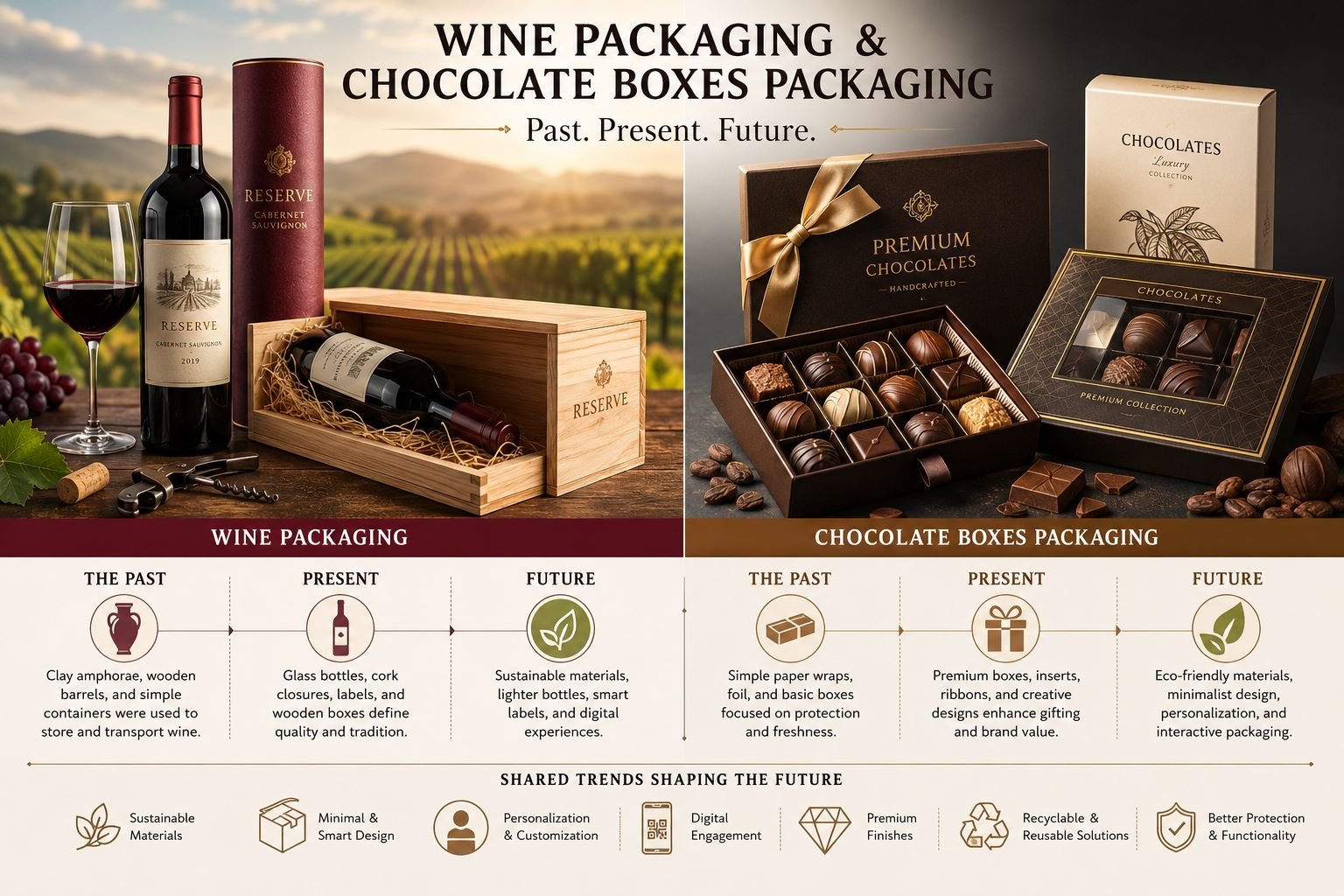
Packaging is one of the first things customers notice about a product. Before someone tastes a premium wine or opens a carefully prepared chocolate collection, the package has already created an impression. This is why wine packaging and chocolate boxes packaging have become important parts of modern branding.
However, packaging was not always about visual appeal. Historically, its main purpose was protecting products during storage and transportation. Over time, changing consumer expectations, retail competition, gifting culture, e-commerce, and sustainability concerns transformed packaging into an important communication tool.
Looking at how these two packaging categories developed—and where they are heading—reveals several important trends for manufacturers, retailers, and brands.
The earliest forms of packaging were created around necessity. Products needed containers that could survive transportation and maintain quality.
Wine was historically stored in clay vessels, ceramic containers, wooden barrels, and similar structures. The development and wider adoption of glass bottles changed how wine could be stored, transported, and presented.
Chocolate had its own evolution. Paper, foil, tins, and cardboard provided practical protection, but manufacturers gradually recognized that chocolates were frequently purchased as gifts. This encouraged the development of decorative boxes designed to create a more sophisticated presentation.
The purpose of packaging consequently expanded from simply protecting the product to presenting the product.
Glass bottles, cork closures, printed labels, and decorative bottle elements gradually created the traditional appearance consumers associate with wine.
As more producers entered the market, packaging became an effective way to establish differentiation.
Modern wine packaging can communicate important information about:
Bottle shape, typography, label material, illustration, embossing, and printing finishes can also influence how customers perceive the product.
A minimalist label might communicate contemporary sophistication, while traditional typography and illustrations may emphasize heritage and craftsmanship.
Although the glass bottle remains highly recognizable, the wine industry is exploring alternative packaging approaches.
Lightweight glass, recyclable cartons, cans, alternative closures, and other formats demonstrate how producers are responding to changing consumption patterns.
Convenience is one reason behind this transition, but environmental considerations are equally important.
Traditional premium wine packaging can sometimes involve heavy bottles, elaborate gift boxes, and multiple secondary packaging materials.
Modern brands are reconsidering whether every element is necessary.
Some important developments include:
The objective is not necessarily to eliminate traditional packaging. Instead, brands can retain recognizable characteristics while improving material efficiency.
Future packaging is likely to become more connected.
Consumers increasingly want to understand what they are purchasing, where it originated, and how it was produced. A physical label has limited space, but digital technologies can expand the amount of information available.
QR codes and NFC technology could allow consumers to access additional product information directly from their smartphones.
Future wine packaging may connect customers with:
This can help packaging become a bridge between the physical product and the brand’s digital presence.
Chocolate packaging evolved significantly as chocolate became associated with celebrations, romance, festivals, and gifting.
A chocolate box is not merely a container. In premium segments, opening the box is part of the experience.
Manufacturers therefore started investing in decorative structures, attractive printing, ribbons, compartments, trays, foil details, and premium papers.
Over time, chocolate boxes packaging became closely connected with the perceived value of the chocolates inside.
Presentation is important, but chocolate is also a delicate product.
Packaging needs to minimize movement and protect chocolates against breakage and contamination. This has become particularly relevant with the growth of e-commerce.
A box designed primarily for a retail shelf may not necessarily perform well during courier transportation.
Effective packaging should therefore consider:
This combination of functionality and presentation is essential for premium chocolate brands.
Consumers are paying greater attention to unnecessary packaging, particularly single-use plastic and oversized boxes.
As a result, chocolate boxes packaging is gradually moving toward designs that use fewer materials while maintaining a premium appearance.
Future packaging solutions may increasingly incorporate recyclable paperboard, moulded fibre inserts, reusable rigid boxes, responsibly sourced paper, reduced plastic components, and more efficient printing techniques.
A simpler structure can also reduce waste.
This does not mean premium packaging needs to become visually plain. Texture, typography, structural creativity, embossing, and carefully selected materials can create a high-end appearance without excessive layers.
Personalized packaging has traditionally been associated with large production requirements and additional costs. Digital printing is changing that model.
Both wine and chocolate brands can increasingly produce shorter customized runs.
Customization is especially valuable within gifting because it increases the emotional significance of the product.
| Packaging Factor | Wine Packaging | Chocolate Boxes Packaging |
| Traditional Format | Glass bottle | Paperboard box |
| Primary Function | Preservation and protection | Protection and presentation |
| Branding Area | Bottle and label | Complete outer box |
| Gifting Potential | High | Very High |
| E-commerce Concern | Weight and breakage | Crushing and product movement |
| Sustainability Focus | Lightweight formats | Plastic and material reduction |
| Personalization | Labels and gift boxes | Boxes, sleeves and messages |
| Digital Opportunity | QR and NFC | QR and interactive gifting |
Despite their differences, both sectors are moving toward packaging that is functional, attractive, sustainable, and digitally connected.
Future consumers will expect more from packaging without necessarily accepting more packaging material.
This means manufacturers and brands should focus on creating value through intelligent design rather than unnecessary complexity.
Key priorities are likely to include:
Brands capable of balancing these factors can create packaging that remains relevant as customer expectations change.
Wine packaging includes bottles, closures, labels, cartons, gift boxes, and protective materials used for storing, transporting, and presenting wine.
Packaging protects the product while communicating quality, origin, brand personality, and market positioning to potential customers.
Future developments are expected to focus on lighter materials, sustainability, digital connectivity, personalization, and improved recyclability.
Yes. Lightweight bottles, recycled materials, recyclable cartons, reduced secondary packaging, and efficient production can improve sustainability.
Chocolate boxes packaging refers to boxes, inserts, trays, sleeves, wrappers, and other components used to protect and present chocolate products.
Premium presentation improves gifting appeal, perceived value, brand recognition, and the overall customer experience.
It should combine structural protection, suitable materials, attractive presentation, convenient opening, and appropriate product separation.
Yes. Brands can consider recyclable paperboard, fibre-based inserts, reusable boxes, reduced plastics, and material-efficient structures.
QR codes can provide product stories, sourcing details, instructions, authenticity information, videos, promotions, and other digital content.
Yes. Digital printing and shorter production runs are making customized packaging increasingly accessible for events, gifting, and limited editions.
https://newsgrow.blogspot.com/2026/08/cosmetic-packaging-boxes-deep-guide-to.html
https://newsgrow.blogspot.com/2026/08/luxury-cosmetic-packaging-and-perfume.html
https://tandtlawassociates.com/wine-packaging-and-chocolate-boxes-packaging-past-present-and-future/