


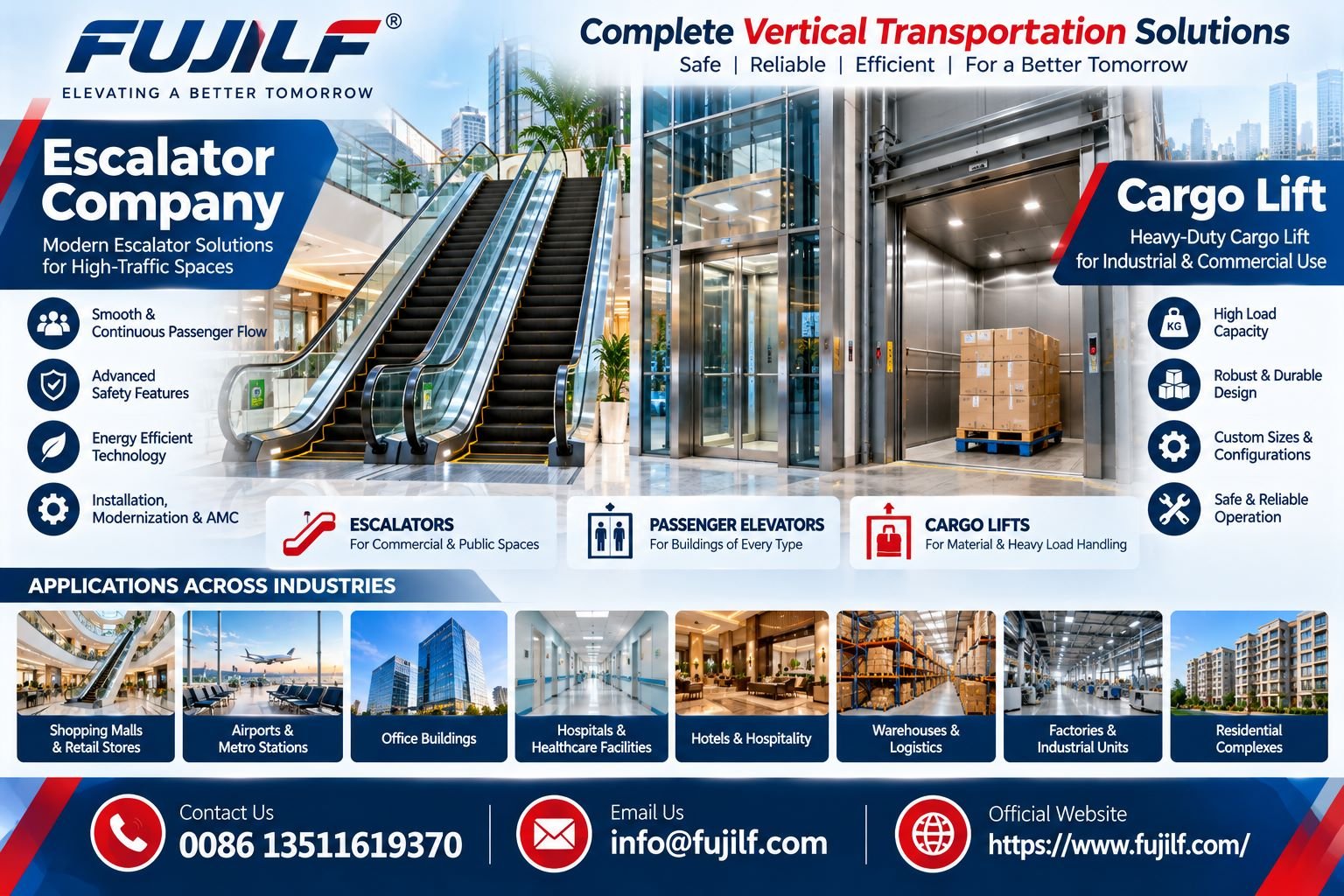
Large stadiums, exhibition halls, entertainment complexes, and convention centres present unique transportation challenges. These properties must accommodate substantial visitor movement while supporting the transportation of equipment, supplies, and event materials.
An experienced escalator company can help venue developers evaluate passenger circulation requirements, equipment positioning, and suitable escalator configurations.
Meanwhile, a cargo lift provides a specialized solution for transferring approved goods between storage areas, service floors, and operational facilities.
These two transportation systems perform different functions but contribute to the overall efficiency of large event venues.
The main planning challenge involves balancing visitor convenience with the logistical requirements of event organizers, maintenance teams, and commercial operators.
When transportation equipment is incorporated into the building’s operational design, facilities can provide more organized movement throughout different areas.
Sports stadiums and entertainment arenas often experience concentrated passenger movement before and after major events.
Visitors may need to travel between entrances, concourses, seating levels, hospitality lounges, and other designated areas.
A professional escalator company should evaluate these circulation patterns when recommending transportation equipment.
Important considerations include:
Effective escalator planning can improve circulation, but it must form part of a complete crowd-management strategy.
While escalators primarily serve visitors, goods-handling equipment supports the operational activities taking place away from public areas.
A cargo lift can transport permitted materials between designated building levels according to its approved specifications.
Event venues may require lifting equipment for moving merchandise, catering supplies, exhibition materials, maintenance equipment, and other operational goods.
For example, a convention centre may need to transfer equipment cases from a loading area to an upper-level exhibition service zone.
A suitable goods lift can support these movements without relying on public passenger transportation routes.
An important infrastructure principle explains:
This approach highlights the importance of separating public circulation from material-handling activities.
Unlike some commercial buildings with relatively consistent occupancy patterns, event venues may experience substantial fluctuations in visitor demand.
A stadium may remain relatively quiet during preparation activities and later accommodate large numbers of visitors.
Transportation systems should therefore be evaluated according to the facility’s intended operating conditions.
For escalators, designers may consider passenger circulation patterns, available landing space, and interaction with surrounding pedestrian routes.
For cargo lifting equipment, planning should consider the types of materials being transported, load distribution, platform dimensions, and access to service areas.
Neither system should be selected solely according to maximum advertised capacity.
The equipment must match actual building requirements and applicable safety standards.
Efficient event operations depend on how materials move through a property.
Loading docks, storage rooms, catering preparation areas, and event spaces should be connected through suitable service routes.
Poorly positioned goods-handling equipment can create unnecessary movement or restrict access for employees.
A properly planned cargo lift installation may help establish a practical connection between different service levels.
However, the equipment must accommodate the intended goods and any approved loading devices.
Platform size, door clearance, rated capacity, and structural compatibility are essential selection factors.
The building layout should also allow materials to enter and leave the lift without obstructing surrounding operations.
Escalators operating in public entertainment venues require suitable safety features and professional maintenance.
Crowded surroundings can create additional operational challenges, particularly near equipment entrances and exits.
Venue operators should maintain appropriate passenger guidance, unobstructed landings, and clear emergency arrangements.
Escalators should not be treated as substitutes for required emergency exits or accessible transportation routes.
A practical safety observation states:
Goods-handling systems require a different set of safety considerations.
Cargo lifting equipment should only carry loads and occupants permitted under its approved classification.
Employees must follow authorized loading procedures and never exceed rated capacity.
Transportation equipment problems can complicate event preparation and facility operations.
A malfunctioning goods lift may interrupt planned material movement, while an unavailable escalator may require changes to visitor circulation arrangements.
Preventive maintenance helps identify equipment deterioration and supports operational readiness.
An escalator company providing maintenance services may inspect relevant drive components, moving steps, handrails, controls, and protective devices.
Cargo lift servicing may involve checking doors, lifting mechanisms, electrical controls, and safety components.
Maintenance schedules should follow manufacturer requirements and applicable regulations.
Facility managers should also develop suitable contingency arrangements for equipment interruptions.
Not every entertainment or exhibition facility requires the same transportation configuration.
A compact conference centre may have different operational needs from a large stadium.
Developers should evaluate equipment requirements through a structured planning process.
These considerations help organizations compare equipment configurations according to operational suitability.
The effectiveness of large event facilities depends partly on how well their transportation systems support different activities.
Escalators contribute to visitor movement, while cargo lifts support essential logistics behind the scenes.
Successful coordination requires thoughtful equipment placement, appropriate capacity, clear operating procedures, and professional maintenance.
For venue developers, transportation planning should address the complete visitor and operational experience rather than treating individual lifting systems as isolated installations.
An escalator company may provide equipment selection, technical planning, installation support, and maintenance services. The specific scope depends on the provider and project requirements.
A cargo lift transports approved goods between building levels. It may support the movement of exhibition materials, catering supplies, maintenance equipment, and other operational items.
Separating these activities can reduce interference between public circulation and logistical operations while supporting more organized building management.
Relevant factors include expected passenger demand, equipment specifications, landing arrangements, building layout, and applicable technical requirements.
Facilities should follow manufacturer-recommended servicing, conduct required inspections, maintain accurate equipment records, and arrange qualified technical support for identified faults.
Department: Business Enquiries & Vertical Transportation Solutions
Industry: Escalators, Elevators, Cargo Lifts & Commercial Lifting Equipment
Contact: 008613511619370
Email: info@fujilf.com
Official Website: https://www.fujilf.com/