


Property developers and facility managers must also consider how transportation equipment influences energy consumption, maintenance requirements, and long-term operational costs.
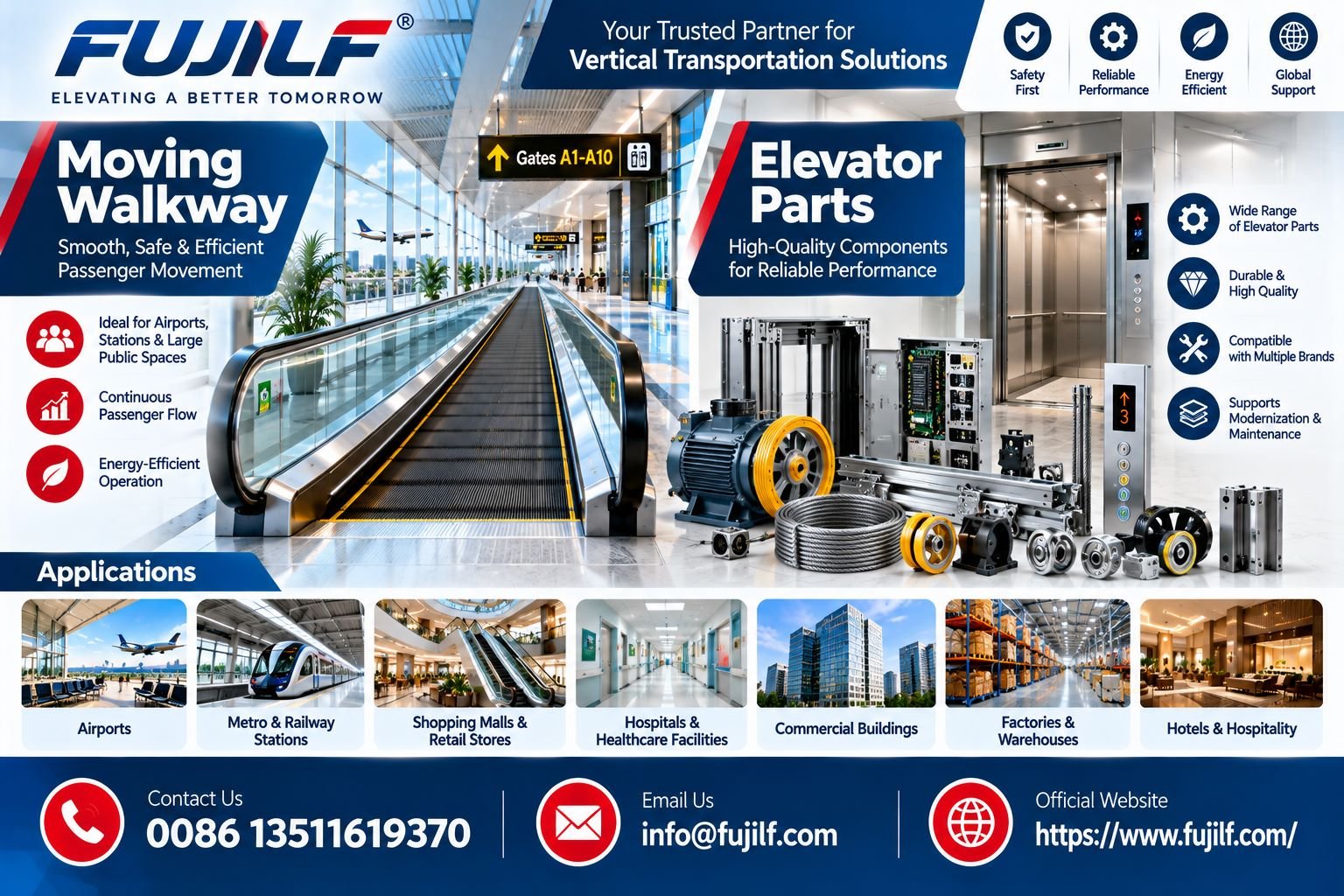
A moving walkway provides convenient passenger transportation across extended corridors in airports, shopping centres, transportation terminals, and large commercial properties.
Meanwhile, reliable elevator parts support the mechanical, electrical, and safety functions of vertical transportation systems.
Although these technologies serve different purposes, both contribute to the efficiency and performance of building infrastructure.
An important consideration is how equipment selection, component durability, and responsible maintenance practices can support more resource-conscious building operations.
The objective is to create transportation systems that remain functional, safe, and economically practical throughout their intended service life.
Large public facilities often require transportation equipment capable of accommodating significant passenger movement.
Airports, exhibition centres, and shopping complexes commonly use moving walkways to connect different areas.
A moving walkway operates through coordinated drive systems, moving platforms or belts, handrails, and protective components.
Its energy requirements depend on several factors, including equipment design, operating conditions, passenger demand, and control arrangements.
Building operators seeking efficient transportation solutions should evaluate equipment performance according to actual usage requirements.
Potential operational considerations include:
These factors help property managers assess transportation systems beyond their initial purchase cost.
Elevators depend on numerous interconnected components to operate safely and efficiently.
Appropriate elevator parts are essential for maintaining system functionality and supporting equipment serviceability.
Different components have different operating functions and maintenance requirements.
Drive equipment provides the mechanical power required for elevator movement.
Its suitability depends on the specific elevator configuration, load requirements, and operating conditions.
Elevator door systems experience repeated movement and require appropriate inspection and maintenance.
Worn or damaged components can affect equipment availability and passenger convenience.
Control systems coordinate elevator functions according to the equipment’s approved operating design.
Replacement controllers must be compatible with the intended installation.
Protective devices perform essential safety functions and must meet applicable technical requirements.
Such components should never be substituted without appropriate engineering verification.
Selecting correctly specified parts helps maintain the integrity of the overall elevator system.
Traditional equipment purchasing often emphasizes acquisition price.
However, building transportation systems may require substantial ongoing expenditure for electricity, servicing, replacement components, inspections, and eventual modernization.
Lifecycle planning considers these requirements before purchasing decisions are finalized.
For a moving walkway installation, developers should evaluate expected passenger demand, operating arrangements, component accessibility, and maintenance support.
Elevator owners should similarly consider spare-parts availability, equipment compatibility, and long-term service requirements.
An important infrastructure management principle explains:
This approach encourages more informed comparisons between alternative equipment configurations.
Modernization can sometimes extend the useful life of existing transportation equipment.
Instead of replacing an entire installation, building owners may evaluate whether selected components can be upgraded while maintaining regulatory compliance.
For elevators, appropriate modernization may involve replacing suitable control equipment, drive components, or other approved systems.
Moving walkway modernization may also involve evaluating mechanical and electrical components according to the existing equipment’s condition.
However, partial upgrades are not suitable for every installation.
Engineering compatibility, structural integrity, available documentation, and applicable safety requirements must guide decisions.
Environmental benefits also depend on the materials, manufacturing activities, transportation, and service-life changes associated with the modernization project.
A complete replacement may be the more appropriate choice when existing equipment cannot safely or economically meet operational requirements.
Replacement components form an important part of transportation equipment maintenance.
When parts are replaced, organizations should consider appropriate handling, recycling, and disposal procedures.
Certain metallic components may be suitable for material recovery through approved recycling processes.
Electronic components may require specialized waste management because they can contain materials requiring controlled treatment.
A responsible component-management approach includes:
Safety-critical components should never be reused merely to reduce waste without the required engineering assessment and authorization.
Mechanical deterioration can affect the operation of transportation equipment.
Improperly maintained components may contribute to unnecessary friction, irregular movement, or increased mechanical resistance.
Professional maintenance helps identify equipment conditions that require attention.
For moving walkways, relevant activities may involve inspection of drive mechanisms, moving surfaces, handrails, and associated mechanical assemblies.
Elevator maintenance includes checking appropriate drive components, doors, control systems, and safety equipment.
A useful engineering observation states:
However, maintenance should not be presented as a guarantee of specific energy savings.
Actual performance depends on the equipment and its operating conditions.
Accurate technical documentation supports effective maintenance and purchasing decisions.
For transportation equipment, relevant information may include approved specifications, component identification, inspection procedures, and maintenance recommendations.
Such records can help facility managers determine whether proposed replacement components are suitable.
Documentation also supports modernization planning by identifying the existing equipment configuration.
When comparing suppliers, building owners should seek clear information about product limitations and applicable technical requirements.
Reliable purchasing decisions depend on verified compatibility rather than general marketing descriptions.
Responsible infrastructure development benefits from considering both environmental and operational performance.
Moving walkways provide convenient transportation across large facilities, while correctly specified elevator components support essential vertical movement.
The wider opportunity lies in selecting durable equipment, maintaining appropriate servicing arrangements, and managing components responsibly throughout their lifecycle.
Sustainability should be evaluated through documented performance and realistic operating requirements rather than unsupported claims.
For developers and facility operators, effective planning connects passenger convenience, engineering reliability, safety, and responsible resource management.
A moving walkway is a transportation system that carries passengers along a horizontal or gently inclined moving surface. It is commonly used in airports, shopping centres, and large public facilities.
Appropriately designed equipment, suitable operating controls, and professional maintenance may help manage energy consumption. Actual efficiency depends on equipment specifications and usage conditions.
Correctly specified elevator parts help maintain essential mechanical, electrical, and safety functions. Appropriate maintenance and compatible replacements support continued equipment operation.
Certain materials and components may be suitable for recycling through approved processes. Recycling suitability depends on material composition, condition, and applicable waste-management requirements.
They should assess passenger demand, technical specifications, installation requirements, energy performance, maintenance support, lifecycle costs, and applicable safety regulations.
Department: Business Enquiries & Vertical Transportation Solutions
Industry: Elevators, Escalators, Moving Walkways & Elevator Components
Contact: 008613511619370
Email: info@fujilf.com
Official Website: https://www.fujilf.com/