


Construction industry is increasingly exploring prefabricated building components to simplify installation and improve project coordination. Glass panels used in modular offices, commercial interiors, façades, and architectural partitions often require precise processing before reaching the installation site.
A modern glass machine helps manufacturers complete specialized fabrication operations according to approved production specifications.
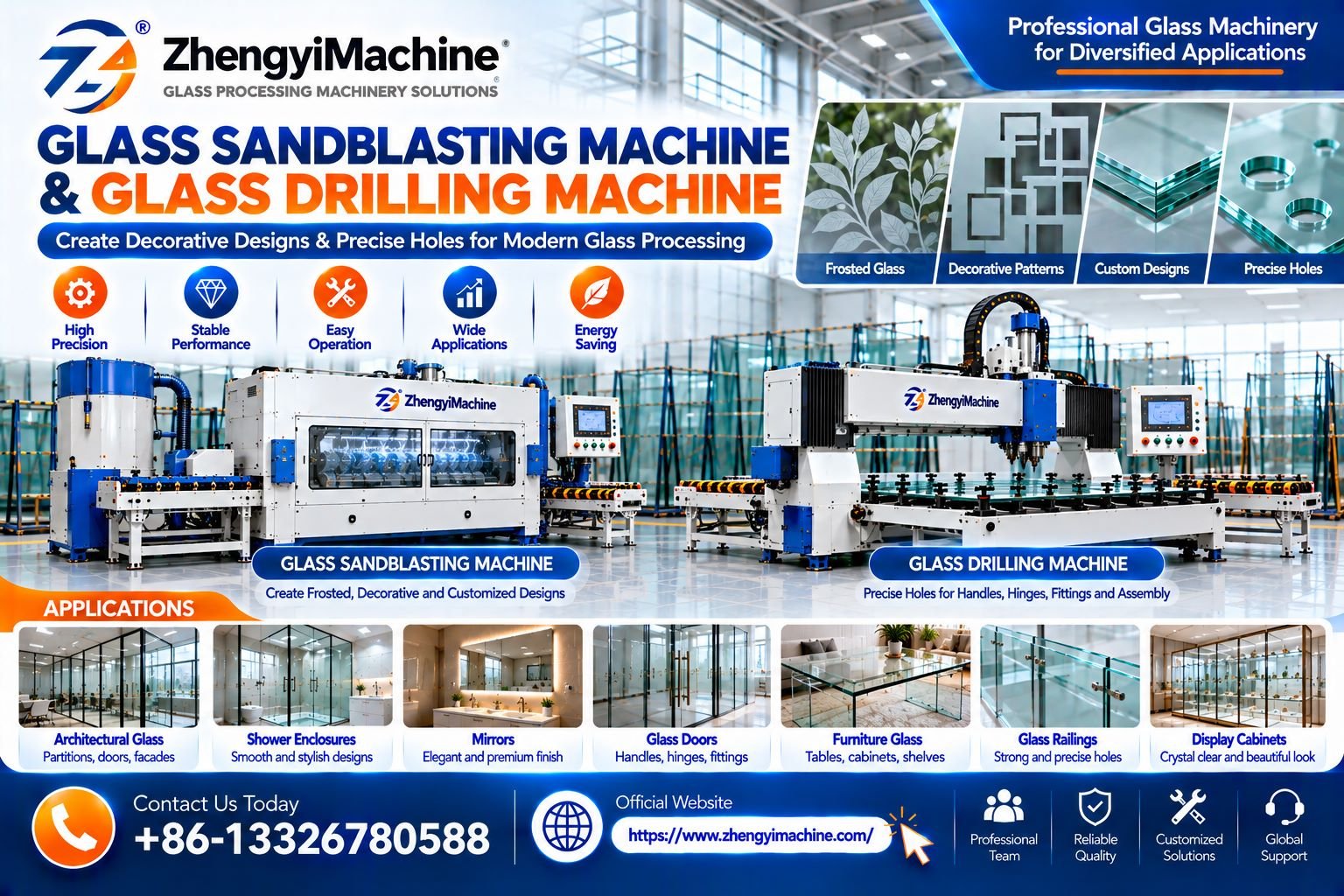
A Glass Sandblasting Machine provides controlled surface treatment for selected decorative, privacy, and architectural applications.
Meanwhile, a Glass Drilling Machine produces accurately positioned openings required for compatible fittings and approved installation systems.
Together, these technologies can support the preparation of customized glass components before construction teams begin assembly.
The key manufacturing challenge is delivering panels that meet design requirements while minimizing avoidable modification at the installation site.
Prefabricated construction depends on components arriving with the correct dimensions, finishes, and connection details.
Unlike conventional fabrication processes where adjustments may be considered during installation, preassembled systems often require closely coordinated specifications.
Incorrectly positioned holes or unsuitable surface treatments may lead to additional processing or replacement.
Glass fabricators must therefore understand the complete installation requirements before production begins.
Important considerations include:
A structured approach helps manufacturers deliver components that are more suitable for their intended installation.
A glass machine may perform cutting, drilling, grinding, washing, or surface treatment depending on its design.
In prefabricated construction projects, equipment selection should reflect the technical characteristics of the glass components being manufactured.
For example, a commercial partition project may require several panels with identical dimensions but different hardware positions.
Clear production instructions help operators process each component according to the correct specification.
A manufacturing principle explains:
Manufacturers should therefore coordinate design information, equipment settings, and inspection procedures rather than evaluating machine performance in isolation.
A Glass Sandblasting Machine uses controlled abrasive treatment to create textured or frosted effects on suitable glass surfaces.
For modular commercial interiors, this process can provide decorative finishes and selected privacy features.
Potential applications include office meeting-room partitions, reception screens, decorative dividers, and architectural panels.
Sandblasting may also support specific visual design requirements where partial transparency is desired.
However, surface treatment can influence glass strength and suitability.
Manufacturers must confirm that the selected glass type, treatment method, and processing sequence satisfy applicable design and safety requirements.
The objective is to achieve the specified finish without compromising the intended performance of the finished component.
The Glass Drilling Machine plays an important role in producing panels intended for mechanical installation.
Glass assemblies may require openings for approved brackets, handles, connectors, or other mounting components.
The correct hole diameter, location, and edge distance depend on the glass design and hardware requirements.
Drilling errors may prevent components from fitting correctly during assembly.
An important technical observation states:
Manufacturers should verify drilling specifications against approved technical drawings.
For conventional thermally toughened glass, drilling generally must be completed before tempering.
Processing decisions should follow the requirements of the particular glass product.
Prefabricated projects may contain numerous glass panels that appear similar but have different specifications.
Without suitable identification procedures, manufacturers may experience difficulties matching components to their intended installation locations.
Digital production records can help organize information such as:
These records can support communication between fabrication teams and construction contractors.
However, digital documentation must be based on accurate measurements and verified production information.
A successful fabrication process should include inspections appropriate to the finished product.
For sandblasted panels, inspection may involve reviewing surface consistency, pattern placement, and visible defects.
For drilled panels, operators should verify hole dimensions, positioning, and signs of edge damage.
Dimensional checks should be performed against approved fabrication drawings and relevant tolerances.
Inspection records can help identify recurring processing problems and support appropriate corrective actions.
Manufacturers should also confirm that glass products meet applicable structural and safety requirements before release for installation.
Even accurately processed panels can be damaged during storage and transportation.
Prefabricated glass components may require suitable separation materials, support arrangements, and protective packaging.
The packaging method should reflect panel dimensions, weight, surface condition, and handling requirements.
Sandblasted finishes may require particular care to prevent contamination or inappropriate surface contact.
Drilled glass panels should be handled according to approved procedures to avoid damage around openings.
Clear identification can help installation teams locate the correct components without unnecessary handling.
Glass processing involves sharp edges, moving machinery, abrasives, and potentially heavy panels.
Manufacturers should provide suitable guarding, mechanical handling arrangements, and employee training.
Sandblasting operations require appropriate abrasive selection, containment, dust control, and worker protection.
Drilling processes require compatible tooling, approved machine settings, and suitable cooling arrangements where necessary.
Environmental management should also address processing residues and waste materials according to applicable regulations.
Automation can support consistent production, but it cannot replace safe working practices.
Manufacturers should evaluate equipment according to their project requirements.
Relevant considerations include supported glass dimensions, processing accuracy, surface-treatment capabilities, drilling specifications, and production capacity.
Technical support, maintenance accessibility, and replacement-part availability are also important.
A machine that performs well in general fabrication may not be suitable for every specialized architectural product.
The preferred solution should match actual manufacturing requirements and approved installation specifications.
A glass machine performs specific fabrication operations required to prepare glass components for installation, including cutting, drilling, finishing, or surface treatment.
A Glass Sandblasting Machine creates frosted, textured, or decorative finishes on suitable glass surfaces through controlled abrasive processing.
A Glass Drilling Machine produces accurately located holes for approved fittings and installation hardware, helping glass panels meet specified assembly requirements.
Traceability helps manufacturers identify individual panels, confirm production specifications, maintain inspection records, and coordinate deliveries with installation teams.
No. Processing suitability depends on glass composition, treatment history, structural requirements, and approved manufacturing procedures.
Department: Sales, Product Information & Media Enquiries
Industry: Glass Processing Machinery, Sandblasting & Drilling Equipment
Contact: +86-13326780588
Email: zhengyi@zhengyi.cc
Official Website: https://www.zhengyimachine.com/