


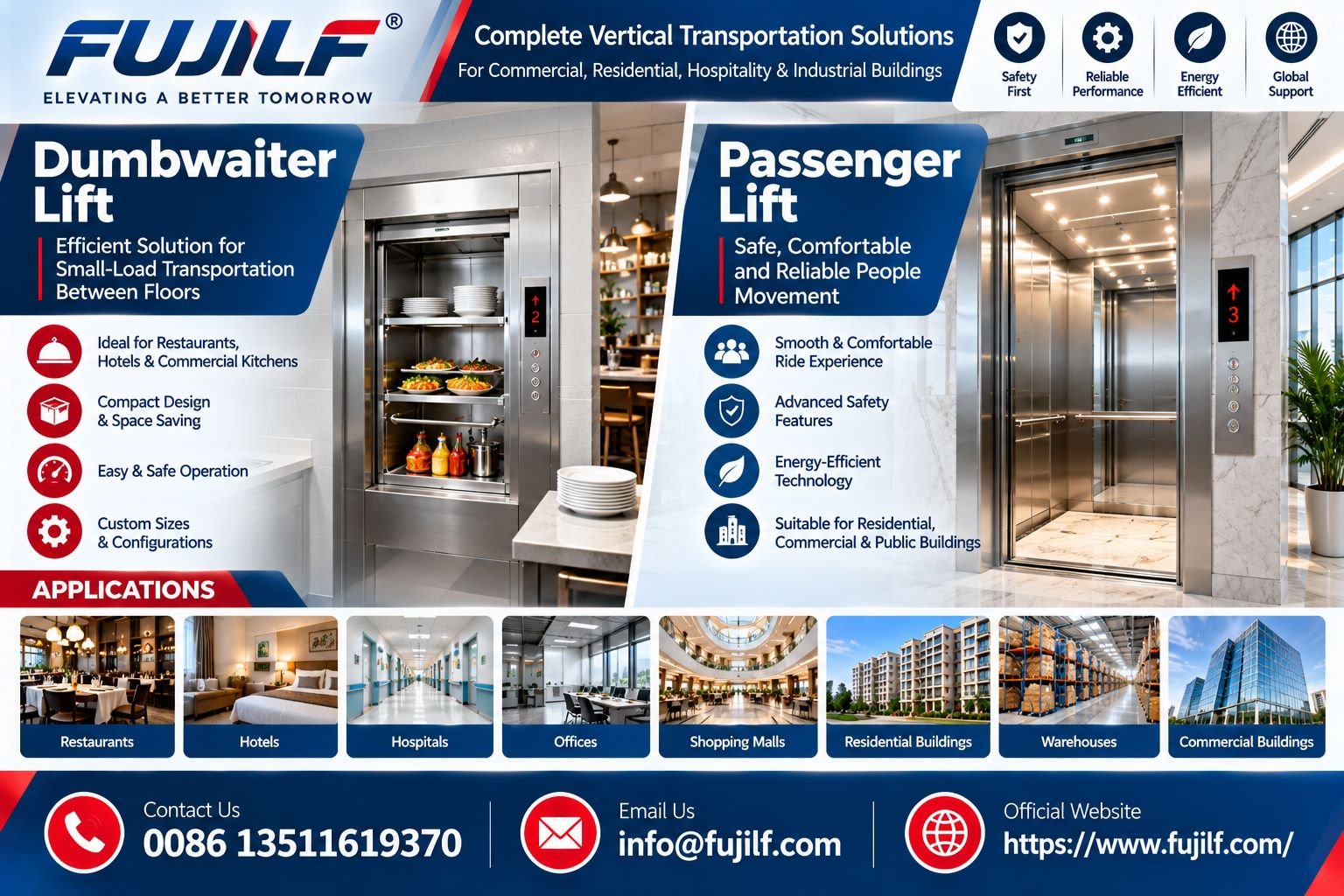
Many existing buildings were designed around operational requirements that differ from the needs of their occupants today. As properties are renovated for modern residential, commercial, and mixed-use purposes, vertical transportation becomes an important part of the planning process.
A dumbwaiter lift offers a compact goods-handling solution for buildings where space is limited and materials must move between floors.
Meanwhile, a passenger lift provides convenient vertical access for residents, employees, visitors, and individuals with mobility limitations.
Integrating these systems into existing buildings requires careful consideration of structural conditions, installation space, accessibility, and safety requirements.
Rather than treating lifting equipment as an additional feature, building owners can incorporate vertical transportation into broader property improvement strategies.
Existing buildings may contain structural arrangements that limit the installation of conventional lifting equipment.
Narrow staircases, restricted floor space, existing service shafts, and limited access can influence the type of lift that can be accommodated.
For property owners, the challenge is identifying equipment that meets operational requirements without compromising structural integrity or essential building functions.
A dumbwaiter lift may be suitable for transferring smaller goods where a full-sized service elevator is unnecessary.
However, its compact dimensions do not eliminate the need for suitable structural support, enclosed lifting arrangements, and safety-compliant installation.
A useful building engineering principle explains:
This approach encourages technical evaluation before selecting any lifting solution.
Space efficiency is one of the major considerations when introducing goods-handling equipment into an existing property.
A dumbwaiter is designed to transport permitted goods between designated levels without carrying passengers.
Its smaller compartment can make it suitable for certain applications where a conventional goods elevator would occupy unnecessary space.
Potential applications include:
The suitability of each application depends on equipment specifications and applicable regulations.
A compact lift should never be overloaded or used for unauthorized purposes.
Accessibility is an important consideration when renovating properties used by residents, employees, or visitors.
Buildings relying entirely on staircases may create difficulties for individuals with mobility limitations.
A properly specified passenger lift can provide step-free access between floors where the building structure and installation conditions permit it.
Lift selection should consider cabin dimensions, door clearances, control accessibility, rated capacity, and applicable building requirements.
Some existing properties may require substantial structural modifications before an elevator can be installed.
Other projects may offer opportunities for appropriately engineered external lift arrangements.
In every case, qualified professionals must evaluate structural feasibility and compliance before installation.
Not every lifting system serves the same function.
A dumbwaiter is intended for goods, while a passenger elevator is designed and approved to carry people.
This distinction affects equipment size, construction, controls, and safety requirements.
For example, a small office building may require a passenger elevator for accessibility while using a separate dumbwaiter to move documents and supplies.
Combining these functions without proper equipment classification can create operational and safety problems.
A relevant design principle states:
Clearly defining transportation requirements supports more appropriate equipment selection.
Retrofitting a lifting system into an existing building requires an understanding of the structure.
Engineering teams may need to examine floor openings, supporting elements, available headroom, and the proposed lifting enclosure.
The assessment should also consider how installation work could affect surrounding building systems.
Important factors include structural loading, equipment clearances, electrical requirements, maintenance access, and applicable fire-safety provisions.
A dumbwaiter lift may be smaller than a conventional elevator, but it still requires a properly engineered installation.
Likewise, passenger elevator retrofits must satisfy applicable accessibility and safety requirements.
Equipment should never be installed solely on the assumption that an available space is structurally suitable.
Renovation projects often aim to preserve the architectural character of an existing property.
Introducing new lifting equipment can influence interior layouts, finishes, and circulation routes.
Designers may explore discreet service openings for goods lifts or suitable architectural treatments around passenger elevator entrances.
However, decorative considerations must not interfere with equipment operation, inspection access, or required safety clearances.
For buildings with distinctive architectural features, careful coordination can help preserve visual character while introducing practical transportation improvements.
This balance is particularly important when renovation involves structures with unusual layouts or protected architectural elements.
Lift maintenance is an important consideration even before equipment installation.
Building owners should evaluate whether technicians will have suitable access to components requiring inspection or servicing.
Access restrictions can complicate maintenance and may increase operational difficulties.
A well-planned project should provide appropriate arrangements for equipment inspection, fault diagnosis, and authorized repairs.
The required servicing procedures depend on the equipment model and applicable regulations.
A useful maintenance principle explains:
Reliable long-term operation depends on suitable equipment selection and professional servicing.
Lift procurement costs represent only part of a renovation project.
Property owners should also consider structural modifications, electrical work, equipment installation, applicable inspections, and maintenance arrangements.
The cost of retrofitting a passenger elevator can differ significantly from installing a compact goods lift because the two systems serve different purposes.
Comparing equipment prices without evaluating installation requirements may produce unrealistic project budgets.
A qualified technical assessment helps identify the complete scope of the proposed work.
A dumbwaiter lift is a compact lifting system designed to transport permitted goods between floors. It is suitable for selected residential, commercial, and institutional applications.
Yes, depending on structural feasibility, available space, accessibility requirements, and applicable regulations. A professional building assessment is essential.
Dumbwaiters require an appropriately designed lifting enclosure or shaft arrangement. The exact configuration depends on the equipment design and installation requirements.
No. Dumbwaiters are designed for transporting goods only. People must use a lift specifically designed and approved for passenger transportation.
They should consider intended usage, load requirements, structural conditions, installation dimensions, safety compliance, accessibility, and maintenance support.
Department: Business Enquiries & Vertical Transportation Solutions
Industry: Elevators, Dumbwaiter Lifts, Passenger Lifts & Lifting Equipment
Contact: 008613511619370
Email: info@fujilf.com
Official Website: https://www.fujilf.com/