


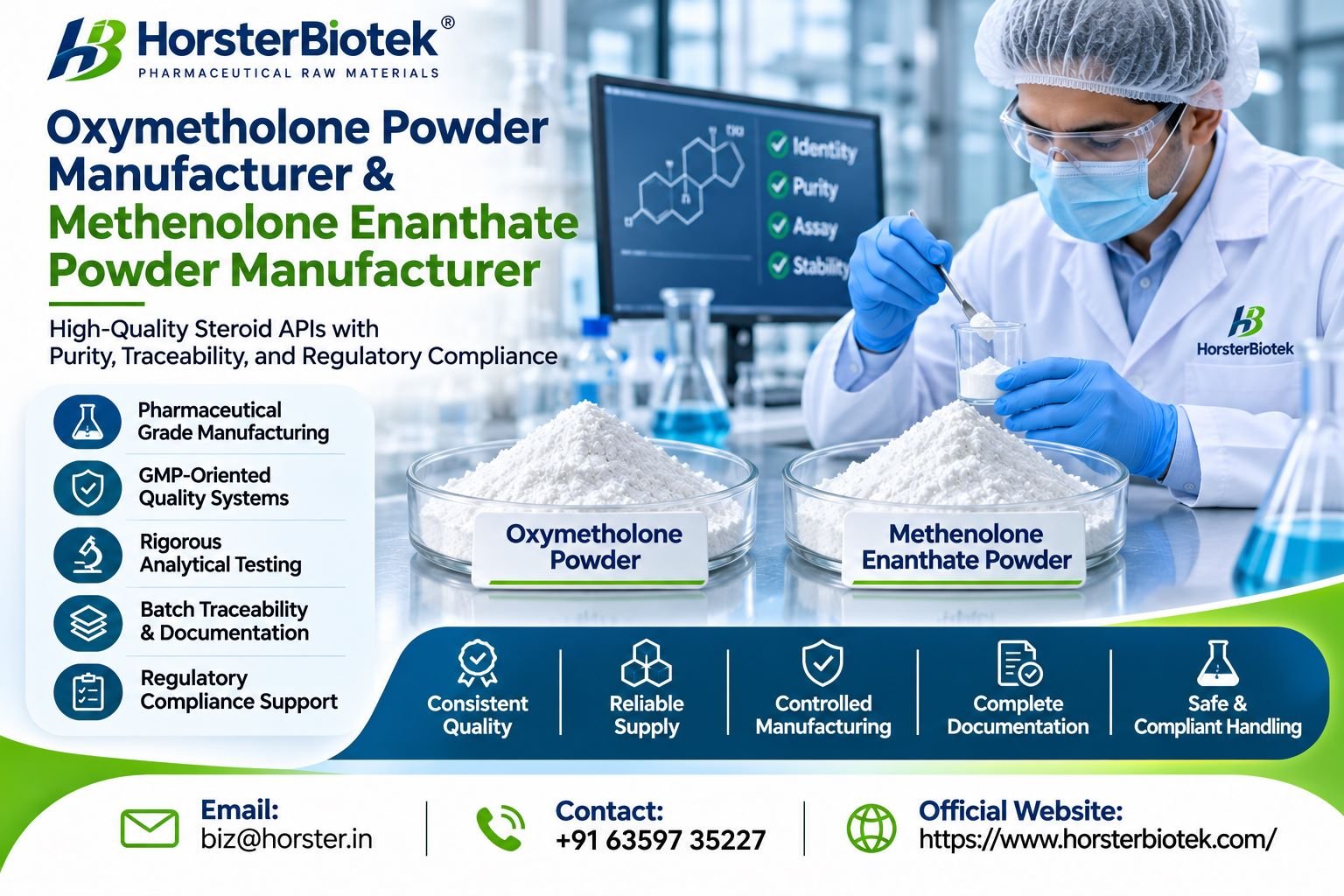
For biologically potent compounds, labeling and documentation play an essential role in communicating product identity and relevant risks.
An Oxymetholone Powder Manufacturer operates in a specialized pharmaceutical category involving a synthetic anabolic-androgenic steroid with significant physiological effects.
Similar responsibilities apply to a Methenolone Enanthate Powder Manufacturer, although the two substances differ in chemical structure, pharmacological characteristics, and regulatory status.
These distinctions make product-specific information particularly important.
Accurate identification is not simply an administrative requirement. Incorrect labeling or incomplete documentation can create serious consequences when regulated pharmaceutical materials move through authorized handling and distribution systems.
The wider industry priority is to ensure that technical information, legal authorization, and safety communication remain aligned.
Oxymetholone is a synthetic anabolic-androgenic steroid that has been used medically in certain jurisdictions, including for specific forms of anemia.
Its pharmacological activity requires careful consideration because androgenic and anabolic effects can be associated with significant adverse reactions.
The compound has also been misused outside approved medical settings, creating additional concerns involving health risks and unauthorized distribution.
For an Oxymetholone Powder Manufacturer, accurate compound identification and documentation are therefore essential components of responsible operations.
Product descriptions should not imply that pharmaceutical-grade material is automatically appropriate for unrestricted human use.
The existence of a raw ingredient, analytical certificate, or manufacturer specification does not establish clinical safety or authorization for a particular application.
Methenolone enanthate is another synthetic anabolic-androgenic steroid, but it is chemically and pharmacologically distinct from oxymetholone.
The compound is an esterified form of methenolone associated with injectable formulations in certain pharmaceutical contexts.
Its legal status and medical availability depend on the jurisdiction.
A Methenolone Enanthate Powder Manufacturer must therefore address the particular identity, documentation, and regulatory requirements applicable to that substance.
Although both compounds belong to the anabolic-androgenic steroid category, their formulations, pharmacological behavior, and safety considerations should not be treated as identical.
An important pharmaceutical communication principle states:
This distinction is essential for preventing misleading product descriptions and inappropriate assumptions about medical applications.
Product labels provide an important link between pharmaceutical materials and their supporting documentation.
In regulated supply chains, labeling requirements may depend on national regulations, material classification, intended use, and applicable quality standards.
Information commonly requiring appropriate control may include:
Label accuracy must be supported by reliable internal controls.
Simply printing comprehensive information on a container does not guarantee that the material has been correctly identified or legally authorized.
Packaging is another important consideration when managing potent pharmaceutical ingredients.
Suitable packaging helps preserve material condition and reduces the possibility of contamination or unintended exposure during authorized handling.
Packaging requirements depend on the material’s characteristics, intended storage conditions, and applicable safety procedures.
For regulated steroidal substances, packaging and labeling should also support inventory accountability.
Clear identification enables authorized personnel to connect physical containers with relevant records.
Damaged packaging, unreadable identification, or inconsistent documentation should trigger appropriate quality review before the material is accepted for further handling.
This approach emphasizes accountability throughout the authorized pharmaceutical supply chain.
Pharmaceutical communication must distinguish verified technical information from unsupported promotional claims.
This is particularly important for anabolic-androgenic steroids because misuse can result in serious health consequences.
Potential risks associated with these substances may include hormonal disruption, cardiovascular complications, reproductive effects, and other adverse reactions.
Oxymetholone also carries important liver-related safety concerns.
Manufacturers and organizations handling these materials should avoid presenting laboratory purity as evidence of clinical safety.
A useful quality and ethics principle explains:
This principle supports more informed professional decisions and reduces the potential for misleading interpretations.
Misrepresentation can occur when product descriptions, documentation, or labeling do not accurately reflect a material’s identity or authorized status.
For highly active pharmaceutical ingredients, these discrepancies can have serious consequences.
Responsible organizations should maintain processes for reviewing documentation, investigating inconsistencies, and ensuring that product information reflects verified records.
The need for accurate communication extends to commercial descriptions.
Terms such as pharmaceutical grade, certified, or medically approved should only be used when supported by appropriate evidence and applicable authorizations.
A manufacturer’s quality claims should never replace independent regulatory requirements.
Anabolic-androgenic steroids are regulated or controlled in many jurisdictions.
Their manufacture, movement, distribution, and use may require specific permissions.
Organizations working with these compounds must understand the legal responsibilities associated with their activities.
Depending on the jurisdiction, requirements may involve manufacturing licenses, controlled-substance restrictions, pharmaceutical quality standards, and authorized distribution procedures.
Compliance also includes recognizing that a product legally permitted in one jurisdiction may be restricted in another.
Consequently, lawful handling cannot be established through generic product specifications alone.
Trust in pharmaceutical supply chains depends on transparent information and accountable business practices.
Manufacturers should communicate product characteristics accurately while avoiding unsupported medical claims.
Organizations handling regulated ingredients should also maintain appropriate records and cooperate with applicable oversight procedures.
These measures help distinguish responsible pharmaceutical activity from unverified or unauthorized commercial practices.
The broader principle is that credibility must be demonstrated through verifiable information and compliance, not marketing language alone.
Oxymetholone is a synthetic anabolic-androgenic steroid with a history of medical use in certain jurisdictions. It has significant biological activity and requires appropriate medical and regulatory oversight.
An Oxymetholone Powder Manufacturer must consider applicable manufacturing authorizations, accurate labeling, quality documentation, product traceability, and relevant regulatory restrictions.
Methenolone enanthate is an esterified anabolic-androgenic steroid associated with certain injectable formulations. Its medical availability and legal status vary across jurisdictions.
Accurate labeling supports material identification, appropriate handling, documentation integrity, and regulatory accountability. Incorrect information can create quality and safety risks.
No. Pharmaceutical-grade claims or analytical purity results do not independently establish clinical safety, therapeutic effectiveness, or authorization for human use.
Department: Media Relations & Pharmaceutical Raw Material Enquiries
Industry: Pharmaceutical Raw Materials and Chemical Ingredients
Contact: +91-6359735227
Email: biz@horster.in
Official Website: https://www.horsterbiotek.com/