


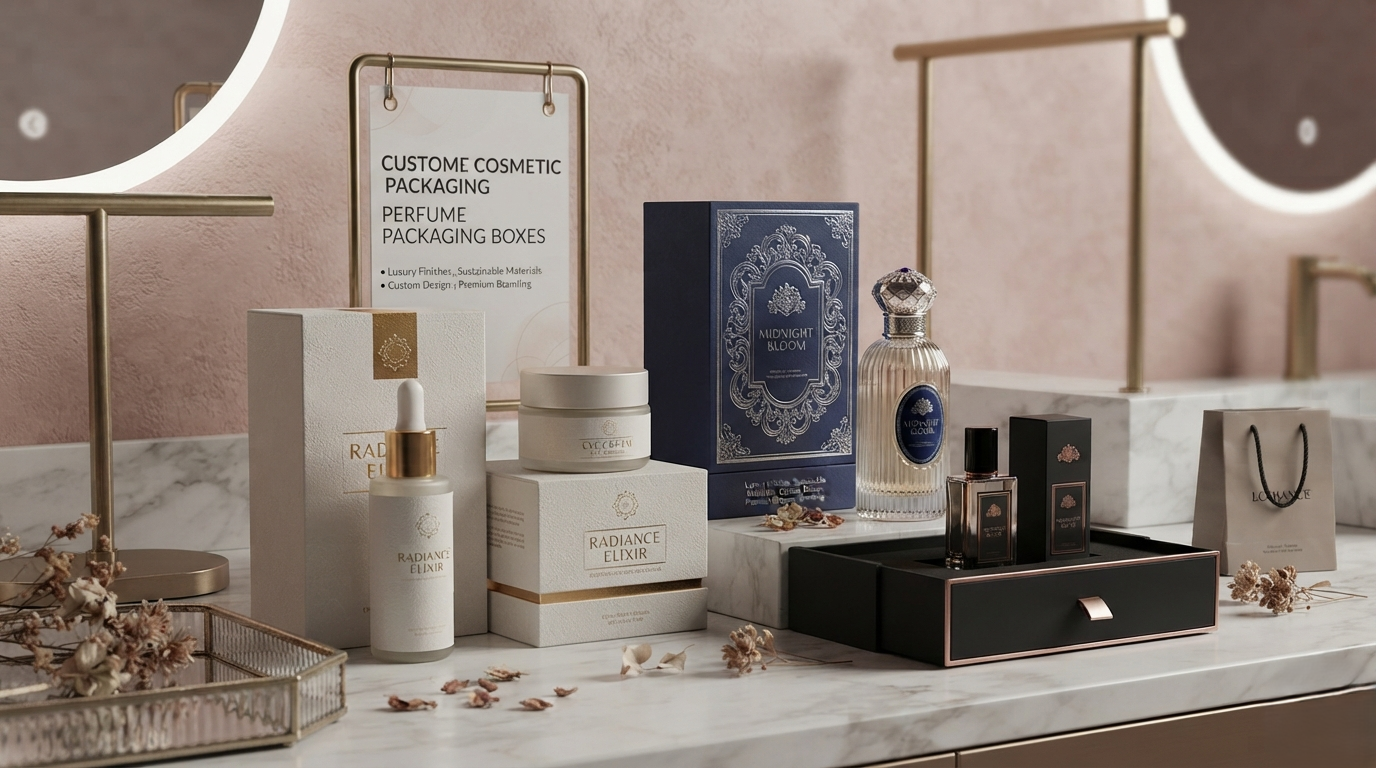
The beauty industry is constantly changing, but one thing remains important: presentation. Before customers try a cream, serum, lipstick, or fragrance, they often notice the packaging first. This is why custom cosmetic packaging and perfume packaging boxes have become essential tools for modern beauty brands.
From traditional containers and simple cartons to sustainable, personalized, and technology-enabled packaging, the industry has experienced a remarkable transformation. Understanding this journey helps brands identify where packaging is heading next.
Cosmetic packaging has existed for centuries. Early beauty products were stored in containers made from materials such as clay, ceramic, glass, metal, and wood. These containers were primarily designed for storage and protection rather than marketing.
As cosmetics became commercially available on a larger scale, packaging started taking on a new role. Labels, printed boxes, decorative containers, and recognizable brand designs helped companies distinguish their products from competitors.
Perfume followed a similar path. Fragrance bottles gradually became decorative objects, while outer boxes were introduced to protect delicate bottles during transportation and improve presentation.
The development of commercial printing and paperboard manufacturing eventually made branded cartons more accessible. This created opportunities for businesses to develop custom cosmetic packaging specifically around their products and visual identities.
Today, packaging is much more than a protective covering. It is part of the customer’s overall experience.
A well-designed package can communicate:
For beauty brands, this is particularly important because consumers increasingly discover products through websites, social media, influencers, and online marketplaces. Packaging must therefore look attractive both physically and digitally.
Modern custom cosmetic packaging can incorporate structural designs, specialty papers, embossing, foil effects, spot UV, custom inserts, die-cut windows, textured finishes, and personalized artwork.
Standard packaging may be practical, but customized packaging gives a brand greater control over how its product is presented.
For example, a skincare company selling premium serums may choose a rigid box with a carefully fitted insert. A natural beauty company may prefer recyclable paperboard with minimalist printing. A luxury makeup brand might select metallic finishes and embossed branding.
Customization allows packaging to match the product’s positioning rather than forcing every product into the same format.
The most effective packaging considers four major factors:
Balancing these elements creates packaging that looks attractive without sacrificing functionality.
Perfume has always been strongly associated with luxury, gifting, and personal identity. Consequently, perfume packaging boxes have developed into an important part of fragrance marketing.
Earlier perfume boxes were often relatively simple protective cartons. Modern designs can be elaborate presentation pieces that create anticipation before the fragrance bottle is even opened.
Luxury perfume packaging may include:
The box must perform two jobs simultaneously: protect the fragrance bottle and communicate the character of the fragrance.
A fresh floral fragrance may use light colors and delicate graphics, while an oriental or luxury fragrance may use darker tones, metallic details, and sophisticated textures.
One of the most significant developments in modern packaging is sustainability.
Consumers and businesses are paying greater attention to waste, material sourcing, recyclability, and packaging efficiency. As a result, beauty brands are exploring alternatives to unnecessary plastic, excessive layers, and oversized boxes.
Future-focused packaging strategies include:
However, sustainable packaging should be approached holistically. Simply choosing a material labeled “eco-friendly” does not automatically make a package environmentally responsible. Designers need to consider the entire packaging lifecycle, including production, transportation, use, and disposal.
Digital technology is also influencing packaging design.
Modern printing technologies allow brands to produce detailed graphics and smaller customized batches. This can support seasonal campaigns, limited editions, influencer collaborations, special events, and personalized product launches.
Packaging can also connect physical products with digital experiences. QR codes and other digital identifiers can direct customers toward:
This turns packaging into an interactive communication channel rather than a static box.
The future of perfume packaging boxes is likely to focus on a combination of luxury, functionality, personalization, and environmental responsibility.
Refill systems can allow consumers to reuse an outer container instead of replacing the entire package with every purchase. This approach could become increasingly important as brands search for ways to reduce packaging waste.
Advances in digital printing may make personalized fragrance packaging more accessible. Customers could eventually see more products featuring names, messages, limited-edition artwork, or event-specific designs.
Connected packaging may become increasingly common. A simple QR code can provide access to product information, authenticity details, usage instructions, or interactive brand content.
Future luxury will not necessarily mean excessive decoration. Premium brands may increasingly use clean structural design, high-quality materials, subtle textures, and carefully selected finishing techniques.
| Feature | Past | Present | Future |
| Main purpose | Protection | Protection + branding | Experience + sustainability |
| Materials | Glass, metal, basic paper | Paperboard, rigid board, mixed materials | Recycled, renewable and optimized materials |
| Design | Simple | Highly customized | Personalized and adaptive |
| Technology | Limited | Digital printing and QR codes | Connected packaging |
| Sustainability | Low priority | Major consideration | Core design principle |
| Customer experience | Basic opening | Premium unboxing | Interactive and reusable experience |
Companies planning new custom cosmetic packaging should think beyond current trends. Packaging investments can influence manufacturing costs, shipping efficiency, customer perception, and environmental performance for years.
A practical development process includes:
This process helps create packaging that is attractive, functional, and commercially practical.
It is packaging designed specifically for a cosmetic product, including its dimensions, structure, artwork, materials, and branding.
Packaging protects the product while creating the first visual and tactile impression of the brand.
They protect fragrance bottles during handling and transportation while enhancing presentation and brand positioning.
Yes. Size, shape, material, printing, inserts, finishes, and artwork can all be customized.
Many paper-based packaging formats can be recyclable, but recyclability depends on the specific materials, coatings, adhesives, and local recycling systems.
Yes. Rigid boxes provide strong protection and can deliver a premium presentation suitable for luxury fragrances.
Yes. Digital printing and modern manufacturing techniques make personalized and limited-edition packaging increasingly practical.
Yes. QR codes can connect customers with digital product information, brand content, instructions, or recycling information.
It is a packaging system designed so that the fragrance can be replenished without replacing the complete outer container.
The future is expected to combine sustainability, customization, smart technology, efficient materials, personalization, and improved customer experiences.
https://newsgrow.blogspot.com/2026/08/cosmetic-packaging-boxes-deep-guide-to.html
https://newsgrow.blogspot.com/2026/08/luxury-cosmetic-packaging-and-perfume.html