


Surface quality is becoming an important consideration in plastic product manufacturing, particularly for companies developing consumer electronics, automotive interiors, household appliances, and premium commercial products.
Beyond dimensional accuracy and structural strength, manufacturers must consider how finished plastic components look, feel, and perform during everyday use.
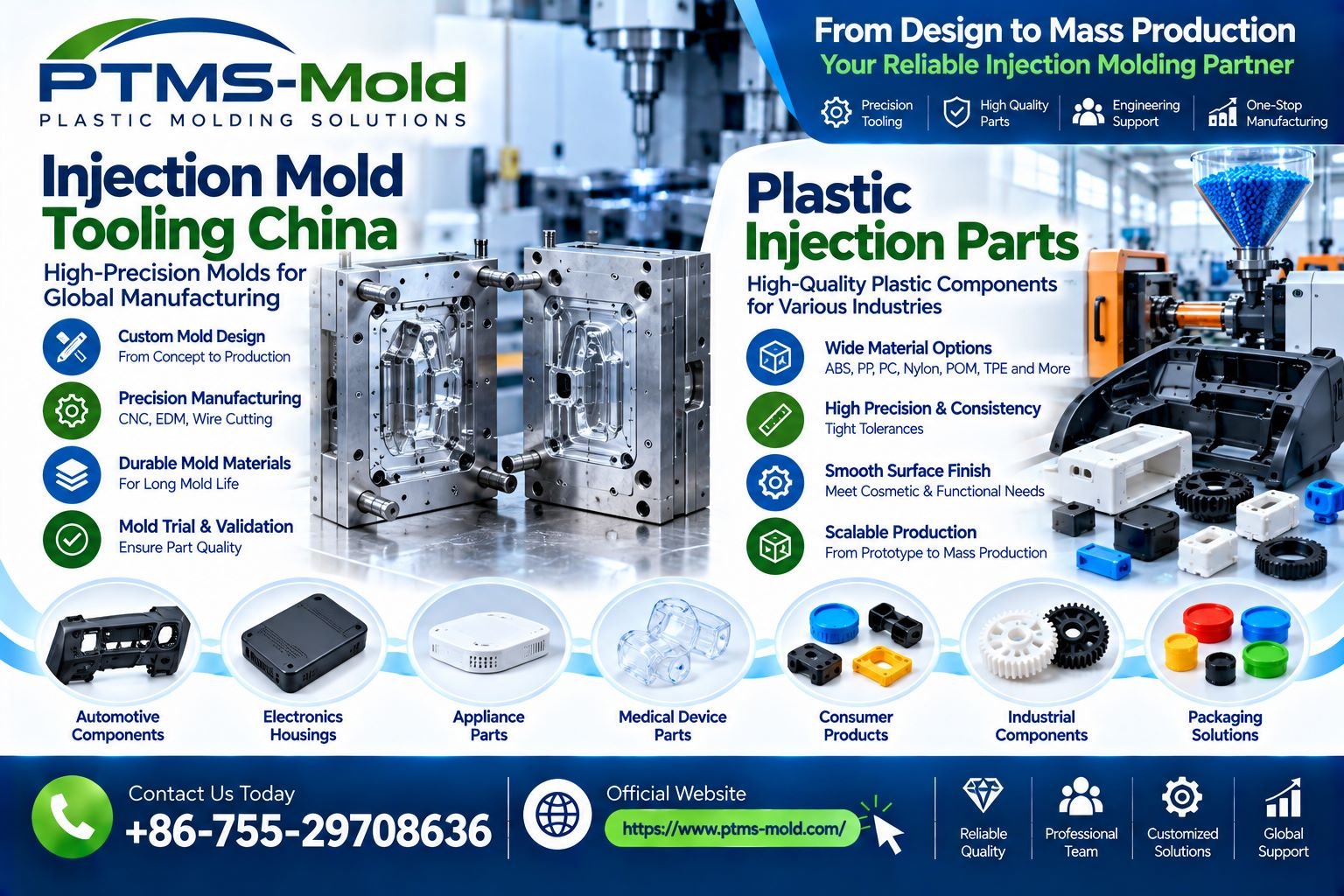
Injection Mold Tooling China offers sourcing opportunities for businesses seeking precision molds with carefully engineered surface characteristics and specialised finishing requirements.
Meanwhile, Plastic Injection Parts can feature different textures, gloss levels, colours, and decorative effects depending on mold construction, material selection, and processing conditions.
The challenge for manufacturers is to achieve attractive and consistent surface finishes without compromising functionality or production efficiency.
For product developers, OEM manufacturers, and industrial buyers, surface engineering is becoming an essential part of plastic component design.
A plastic component’s surface can influence how customers perceive its quality.
Uneven gloss, visible flow marks, scratches, or inconsistent textures may reduce the visual appeal of an otherwise functional product.
Surface characteristics can also affect grip, cleaning requirements, and interaction with surrounding components.
For example, an electronic device enclosure may require a smooth decorative finish, while an industrial handle may benefit from a controlled texture.
These considerations encourage manufacturers to define surface expectations before mold development begins.
Injection Mold Tooling China refers to sourcing injection mold design and manufacturing services from tooling companies operating in China.
These services may include engineering consultation, CNC machining, electrical discharge machining, polishing, texturing, mold assembly, and production testing.
Surface requirements influence several tooling decisions.
Manufacturers must consider cavity finish, part geometry, material flow, and mold maintenance.
For international buyers, clearly documented finishing specifications are essential.
A description such as smooth or premium may be interpreted differently by different suppliers.
Approved reference samples and measurable acceptance criteria can help eliminate uncertainty.
Plastic Injection Parts are components formed by injecting molten thermoplastic material into a specially designed mold cavity.
After the material cools and solidifies, the finished component is removed.
This manufacturing method supports complex shapes, repeatable dimensions, and different surface appearances.
Common applications include appliance panels, automotive trim, electrical housings, cosmetic packaging components, and equipment covers.
However, finished quality depends on the relationship between mold design, polymer properties, and processing conditions.
Even a precisely manufactured mold requires suitable production settings to achieve consistent results.
Mold polishing is used to achieve particular surface conditions on cavity or core surfaces.
Depending on the requirements, manufacturers may use appropriate machining, grinding, and polishing processes.
A highly polished cavity can support a glossy appearance when combined with a suitable plastic material and processing method.
However, polishing does not automatically remove every possible molding defect.
Material behaviour, gate placement, cooling conditions, and contamination can influence the finished result.
Manufacturers should assess the complete molding process before approving decorative requirements.
Texturing creates controlled patterns on selected mold surfaces.
These patterns are transferred to suitable plastic components during molding.
Textured finishes may offer aesthetic benefits, reduce the visibility of minor handling marks, or provide a particular tactile experience.
Common approaches can include chemical etching, laser texturing, and other specialised surface-treatment methods.
However, textures can influence component removal from the mold.
Deep patterns may require additional draft angles or other design adjustments.
Engineering teams should confirm texture specifications before finalising mold geometry.
Plastic molding can produce several surface-related defects when tooling or processing conditions are unsuitable.
| Surface Defect | Possible Contributing Factors |
| Flow Marks | Material flow and temperature conditions |
| Sink Marks | Localised shrinkage and uneven wall thickness |
| Weld Lines | Meeting points of separate melt-flow fronts |
| Gloss Variation | Mold finish and processing differences |
| Surface Scratches | Handling, ejection, or tooling condition |
| Burn Marks | Trapped gases or unsuitable processing conditions |
Identifying the actual cause is essential because similar-looking defects may require different corrective measures.
Different thermoplastic materials respond differently to surface finishing requirements.
ABS, polypropylene, polycarbonate, and other engineering plastics have distinct flow, shrinkage, and appearance characteristics.
Additives and colourants may also influence surface quality.
A texture suitable for one polymer may not reproduce identically with another.
Manufacturers should therefore evaluate material characteristics alongside the selected mold finish.
Representative molding trials can help determine whether the proposed material achieves the required appearance.
Maintaining consistent surface appearance across repeated production batches requires appropriate inspection procedures.
Manufacturers may establish approved reference samples, defined viewing conditions, and acceptance criteria for visible defects.
Inspection requirements should reflect the component’s intended application.
A highly visible consumer product panel may require different cosmetic standards from an internal industrial component.
Colour matching, texture consistency, and surface condition can be reviewed during production.
Documented quality requirements help buyers and suppliers maintain common expectations.
Mold surfaces can experience wear, contamination, and damage during production.
Over time, these changes may influence the appearance of manufactured components.
Appropriate cleaning, inspection, and maintenance can help preserve tooling condition.
However, unsuitable cleaning tools or aggressive polishing may alter carefully engineered textures.
Manufacturers should follow maintenance procedures appropriate to the mold material and surface treatment.
Maintaining inspection records can also help identify changes before they lead to unacceptable production results.
Businesses sourcing molds for appearance-sensitive plastic products should consider:
A suitable tooling partner should explain how product design, mold construction, and processing affect finished surface quality.
1. What is Injection Mold Tooling China?
It refers to injection mold design and manufacturing services sourced from Chinese tooling companies for producing customised plastic components.
2. What are Plastic Injection Parts?
They are plastic components manufactured by injecting molten thermoplastic material into a mold, cooling it, and removing the finished product.
3. How does mold polishing affect plastic parts?
Mold polishing influences the cavity’s surface condition and can help achieve suitable gloss or smoothness when combined with appropriate materials and processing.
4. Can injection-molded plastic components have custom textures?
Yes. Suitable mold texturing processes can create controlled decorative or functional patterns on compatible plastic components.
5. How can buyers improve surface quality consistency?
Buyers should define finishing specifications, approve reference samples, validate materials, establish inspection criteria, and maintain appropriate tooling conditions.
Department: Precision Mold Manufacturing and Plastic Component Enquiries
Contact: +86-755-29708636
Email: sales@ptms-mold.com
Official Website: https://www.ptms-mold.com/